
Know Your Rights

Last Saturday, at my synagogue in Nebraska, the staff put red cards in the pews and by the front door. Each card contained a list of rights that we are afforded by the Constitution and that might be important to invoke if confronted by an agent of the federal government. My friend Rabbi Steven Abraham devoted his sermon to these “Know Your Rights” cards, connecting them to the theme of Jewish memory. There were thoughtful references to times when Jews couldn’t be citizens, times when laws shifted and protections were withdrawn, and to the feeling of needing to keep one’s official documents accessible.
Some people nodded approvingly and some thanked the rabbi afterward for speaking on an important and timely topic; some didn’t appreciate the intrusion of “politics” into their Shabbat morning and others were visibly uncomfortable; finally, some people’s minds wandered toward lunch or an afternoon nap or anything other than the topics of migration, governmental authority, and protest.
At the very beginning of his sermon, Rabbi Abraham characterized the red cards in this straightforward, clear, and compelling way:
Written in clear, accessible language, they outline basic protections guaranteed under the United States Constitution: the right to remain silent, the right to refuse consent to a search without a judicial warrant, the right to speak with a lawyer, and the right not to open one’s door unless officers present proper legal authorization.
They do not obstruct the law.
They do not defy authority.
They simply remind people—often in moments of acute fear—that constitutional rights still apply.
A few hundred miles to the north, at almost exactly the same moment that these red cards were being distributed to congregants in Nebraska, ICE agents pepper-sprayed, wrestled to the ground, and shot Alex Pretti multiple times in just a matter of seconds. Pretti was not obstructing the law or defying authority; he was, first, taking a video of ICE agents and then, seconds before he was killed, putting himself between those agents and a woman who had been pepper-sprayed and shoved to the ground by an agent.
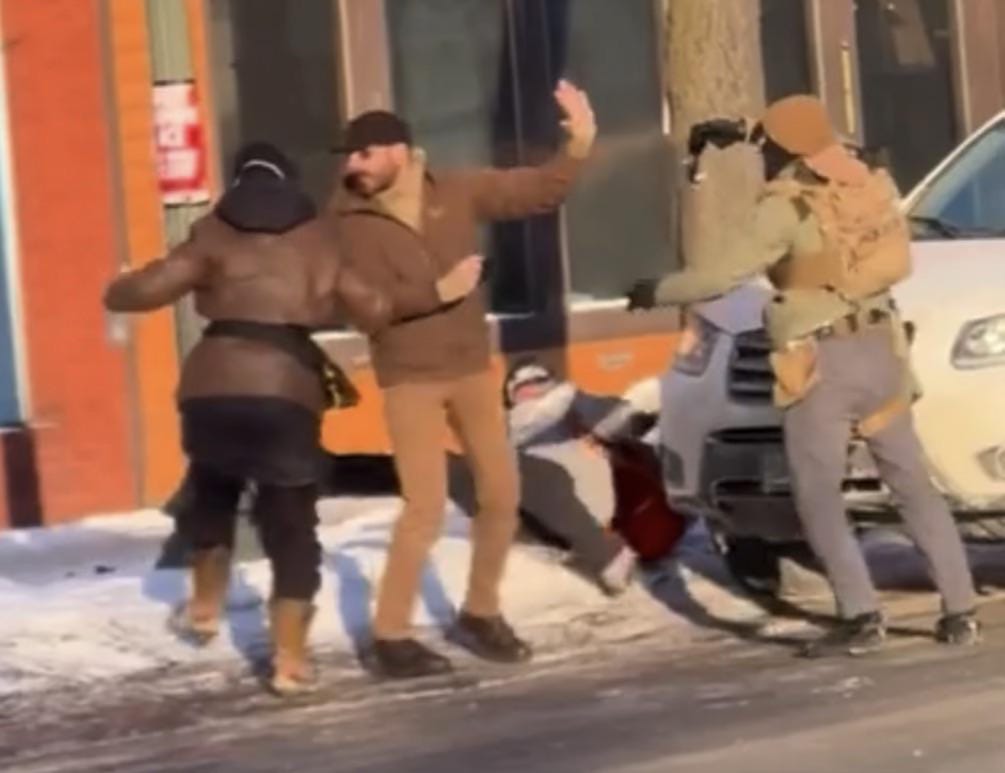
Immediately after the shooting, members of the Trump administration went on television and social media to denounce the victim, lying about both his actions and his intentions. He was, they insisted, a “domestic terrorist;” he “shouldn’t have been carrying a gun;” and he intended “to inflict maximum damage on individuals” and to “massacre law enforcement.” That all of the video evidence contradicts every claim made by President Trump, DHS Secretary Noem, and Border Patrol “Commander" Bovino hardly matters; as political scientist Mark Copelovich has been saying for years, “Performative public lying is a hallmark of far right authoritarian parties.”
While we could certainly talk about the way that liberalism as a political philosophy relies on government officials who tell the truth, this post is about those red cards and the idea of the importance of knowing your rights. Indeed, just like an expectation that citizens will hear the truth from their government, liberalism as a political philosophy relies on standing, unchanging rules, equality under the law, and a set of agreed upon and inviolable rights. So those red cards with their list of rights. Again, to quote Rabbi Abraham, “At the most basic level, red cards are educational tools. They exist because rights that cannot be understood cannot be exercised.”
There is no question that Alex Pretti had the right to film ICE agents on the street. There is no question that he had the right to carry the gun he had in a holster on his person. There is no question that he had the right to attend or participate in a protest. People might prefer that he not protest or film or carry a gun. But he had a right to do so—as do each of us—and neither his understanding of his rights or the exercising of his rights did anything to protect him in the few seconds between his filming the ICE agents and his being shot to death by them.
That’s not to say that the red cards are frivolous or that Rabbi Abraham was mistaken about the importance of knowing our rights. They aren’t and he wasn’t. There are too many people—not just in this country and not just at this time—who are either unaware of their rights or who don’t particularly recognize their importance. But an even greater number of people are likely aware that they have these rights and feel pretty certain that they cannot safely exercise them. These are people who look at the ICE observers in Minneapolis with admiration because their actions are courageous and dangerous. The other day, my friend Matt Langdon wrote about Alex Pretti as a hero:
This was not heroism planned in advance. This was noticing a need.
This is the kind of heroism I’ve been writing about for years. It’s the first barrier to action. It’s unglamorous, emergent, and embodied. It comes from a nervous system that says this is not right.
When we write about or teach the basic building blocks of heroic behavior, we always say that heroism is risky and that we hope you never find yourself in a situation where it’s needed. If most people ask themselves whether they would go out into the streets and take video of ICE enforcement in their community today, their answer likely would be a disheartened but understandable “No.” It’s not surprising that most people don’t want to do something dangerous.
But, in fact, it shouldn’t be dangerous to lawfully exercise our rights. It shouldn’t be heroic to film ICE agents on the street. If we feel that we cannot safely attend a protest or film a law enforcement officer or legally carry a gun—whether or not we will ever do these things or have any desire to ever do them—then we cannot be said to have these rights in any meaningful way. And lest we get to a point where anyone says to themselves, “This doesn’t apply to me,” we should be clear that the question of what it means to have and exercise our rights is a central one to all of us as citizens of a liberal democratic republic.
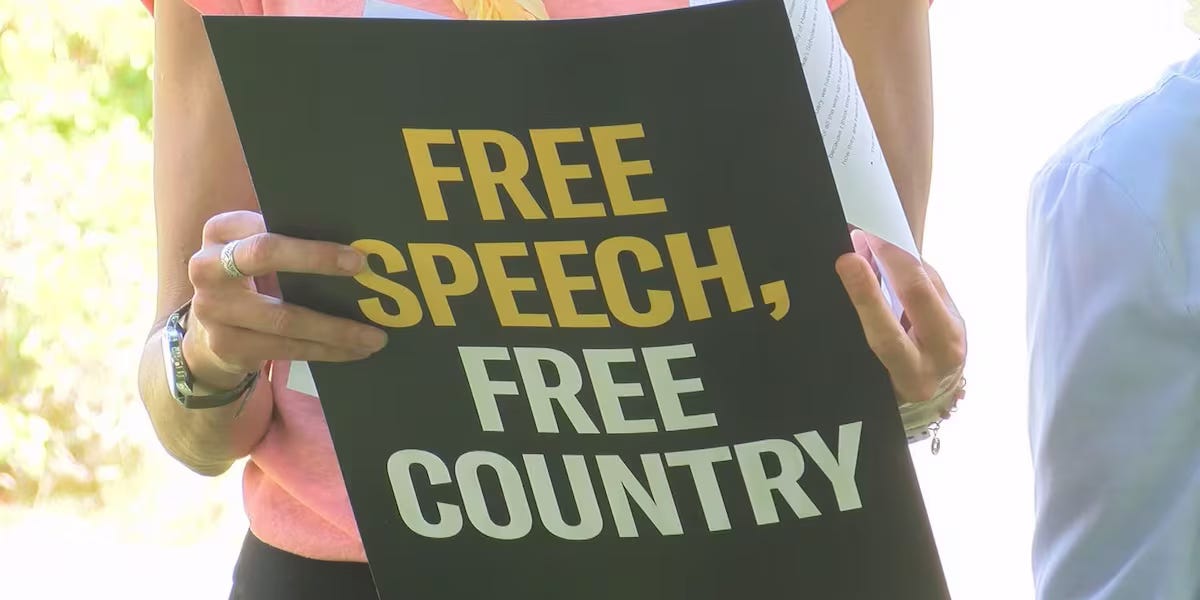
I might choose never to exercise my right to publicly protest the government or to carry a firearm—I might even think that people who do are fools—but this is very different from believing that I don’t have these rights or that I couldn’t one day change my mind and choose to exercise them. We might say to ourselves, “He should’ve stayed home” or “I would’ve stayed home.” Feel that way, if you like. But no matter what our politics might be, no matter what we think about immigration or ICE or carrying a gun, we must not find ourselves in the position of saying, “We must stay home” or “we cannot film.”
It’s insidious, the idea that if we go looking for trouble, any trouble we find is our fault. This is the kind of thinking that authoritarian regimes very much want to instill in people.