
Enemy-Based Politics

There’s a certain clarity that comes from having an enemy. Faced with complex problems and competing values, our ability to identify an enemy offers us a way to cut through the noise. It simplifies the world of ambiguity, tells us who is responsible for anything we don’t like, gives us a list of our opponents, and helps us to quickly pick out our friends. In all of these ways, enemy-based politics can be both extremely attractive and profoundly dangerous. We can pretty easily see its appeal, but we also need to be able to articulate a form of political engagement that can compete with it.
The idea that politics is fundamentally about enemies isn’t a new one and, while it might feel alluring at this particular moment, its intellectual pedigree isn’t stellar. In The Concept of the Political, Carl Schmitt (an esteemed German legal theorist and, later, a Nazi) famously argued that politics can be reduced to the distinction between friend and enemy. For Schmitt, the enemy is someone whose way of life poses a threat to our own and so the purpose of politics is survival against opposition rather than deliberation and compromise. Most people wouldn’t endorse Schmitt’s dark view of political life, especially when they learn more about his own politics, but it’s easy to see when we take even a cursory look at ourselves and our political culture today. Political opponents are described as “destroying the country,” “enemies of the people,” “tyrants,” and “threats to democracy.” These phrases have become so ubiquitous in campaign speeches and cable news segments that now we hear them in a State of the Union address and don’t even blink.
Enemy-based politics operates by collapsing distinctions. It turns disagreement into hostility and encourages citizens to interpret political events through a binary lens. In such an environment, we stop asking, “What should we do?” and we focus entirely on the question, “Which side are you on?” We’ve noticed, and we often complain about, how divisive and unpleasant our society has become as a result, but we keep reinforcing the problem because we nonetheless maintain that the fault lies with the other group. And that’s how our enemy-based politics is undermining liberal democratic life.
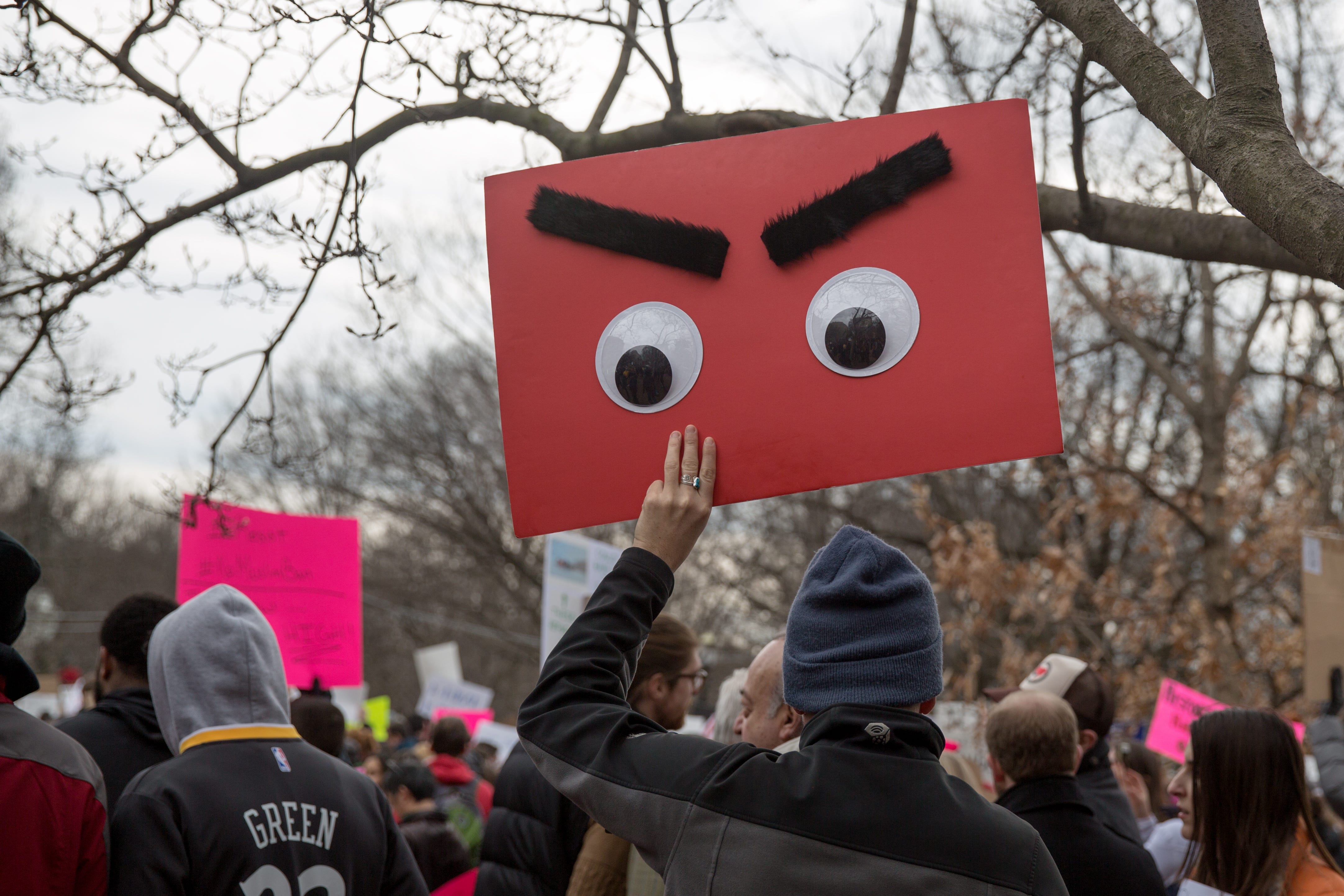
Liberal democracies depend on citizens who can weigh competing considerations, embrace nuance in their thinking, recognize the trade-offs that are part of political life, and then make decisions in the face of scarcity and uncertainty. Enemy-based politics discourages all of this by making it more difficult to acknowledge the complexity of almost every issue that matters without appearing disloyal.
As just one example with which I’m fairly familiar, consider what’s happened on college campuses over the past decade or so. We’ve seen protests and encampments that have been broken up by police, screaming matches over controversial speakers, and a real shift in what we consider the boundaries of acceptable discourse. Students with unpopular opinions might be harassed or publicly shamed on social media, while those who call for cancellation might be celebrated for defending community values. Administrators who advocate for engagement and dialogue might be accused of enabling harm, and faculty members who express their own opinions might become the subject of a social media smear campaign. The end result, no matter which side you’re on, is a narrowing of the space for good-faith disagreement. Positions harden, you’re made to choose sides, and the possibility of mutual understanding diminishes.
Enemy-based politics also encourages escalation. If the other side isn’t just wrong but dangerous, then extraordinary measures can be justified in opposing them. Norms that would otherwise constrain political behavior begin to break down. Each side, convinced of the righteousness of its cause, becomes more willing to break the rules, leading to a cycle of mutual distrust and retaliation. But liberal democratic institutions rely on a baseline level of trust and, when trust erodes, compromise with the other side looks like a betrayal of our side. We assume that our opponents are driven by power with no concern for ethics so we refuse to work with them on legislation and we become consumed with the idea that they will cheat to win elections. Since our political opponents obviously aren’t working toward the same basic goals of good governance as we are, we tend to see them as obstacles to overcome at best or enemies to destroy. This battleground mentality is a fundamental distortion of liberal politics itself, with victory based on the total exclusion of the other side rather than on finding compromises that help us pursue the common good.
This post isn’t going to end with a suggestion that everyone should hold hands and agree about everything. We don’t even need to eliminate conflict or disagreement because politics is always going to involve those things. What we might try to do, though, is to reframe that conflict so that it’s easier to imagine coexistence.
One approach—which I’ve been emphasizing in my classes throughout this academic year—is to examine the difference between opponents and enemies. Opponents are those with whom we disagree, often profoundly, but who are nonetheless part of the same political community and participants in shared institutions. When I’m talking with my students, I call them our neighbors with bad ideas. Their presence is a feature of pluralism and our tolerant interactions with them are a testament to the liberal values we all hold, rather than a threat to our existence.
Maintaining this distinction involves resisting the temptation—amplified every second of every day on Instagram and Twitch—to interpret every disagreement as evidence of the other side’s moral rot. It also requires a willingness to engage with opposing arguments on their merits and to sit with uncertainty and discomfort.
But liberalism isn’t a suicide pact and my continued push for liberal answers to our current political problems shouldn’t be read as a mealy-mouthed call for passivity. There are real threats in the world, and there are times when strong opposition is necessary. Liberalism is built on toleration, equality, the protection of individual rights, the consent of the governed, and the rule of law. So what do we do when others don’t share these commitments? What happens when political actors explicitly embrace enemy-based logic and seek to undermine the norms and institutions that liberalism depends upon?
This dilemma has been especially visible in debates over how to respond to illiberal movements in the United States and around the world. Should such movements be treated as legitimate participants in democratic politics, or as threats that must be excluded or defeated by extraordinary means? I wrote about this almost twenty years ago, in my first book, in an attempt to respond to Richard Rorty on the problem of tolerating intolerance. We know that excessive tolerance can enable illiberal actors, while excessive hostility can erode liberal norms from within. It feels like an unresolvable problem and, in a chapter I titled “Does might make human rights?,” that’s what I concluded all those years ago in my book: “Rorty seems to have bound our hands: there are times when we must either act cruelly ourselves … or sanction cruelty against innocents by refusing to commit cruel acts against perpetrators.”
But that’s not where Rorty concluded and it wasn’t where I ended the chapter. Instead, both Rorty and I turned to a discussion of solidarity as the best way to promote liberal values. In the end, the most effective way to deal with illiberal opponents is to refuse to play the game of enemy-based politics that they insist upon. Opposition to bad ideas doesn’t have to breed hatred or contempt and it’s not only possible but necessary to resist illiberalism without dehumanizing others or abandoning our liberal principles.
In practice, this looks like choosing not to share misleading but emotionally satisfying content online, even when it targets our political opponents. It means supporting institutional reforms that constrain one’s own side as well as the other or even supporting a candidate based on their ideas rather than their party affiliation. It demands that we resist the easy allure of the enemy and commit ourselves instead to the harder work of living together in a world where disagreement is inevitable but destruction isn’t. And it means engaging in difficult conversations that help to build sympathy and solidarity, which Rorty puts at the heart of liberalism.
Yes, and I'm in the midst of writing a substack piece on this topic. Populism = grievance politics = enemy based politics
I'm going to stick with the politics of solidarity that maintains the "which side are you on politics" expressed in song by the great Pete Seeger.
https://youtu.be/bsNVzwuJeVk?si=Ws_PhzV4sDDNT5_s