
America250: A Vacation

If things have seemed a little quieter around here this past week, it’s because I’ve been on a family vacation to visit relatives in Virginia. Apart from the usual travel-related shenanigans and the general excitement of children thrown way off their usual schedules, we were fortunate to spend a few days doing some American history sightseeing.
It’s basically impossible, as a parent, to know whether the fun and interesting plans will seem fun and interesting to the children you’ve dragged along with you. So I’m happy to report that two days at Jamestown, Colonial Williamsburg, the College of William & Mary, and Yorktown were generally well-received by the whole family. It didn’t hurt that we added in a full day of rollercoasters at Kings Dominion in between—ask me about Rapterra—or that the Hamilton soundtrack helped us through a longer-than-anyone-anticipated Yorktown battlefield tour.
In any event, this post isn’t meant to be an excuse for not writing enough; it also won’t be a moment-by-moment travelogue. Instead, I wanted to spend just a couple of minutes reflecting on the extremely high quality of the museums where we spent quite a lot of time at Jamestown and Yorktown. In particular, the Jamestown Settlement experience was sufficiently interesting and immersive that we spent basically an entire day there. We walked in and around recreations of the ships that brought colonists to Virginia, an Indian village, and the Jamestown fort. Since it’s a living history museum, each location had very knowledgeable people in period costume who led various hands-on activities and explained everything about what they were doing. We learned about muskets, tying knots, navigating, blacksmithing, basketweaving from yucca leaves, and making tools from bone.
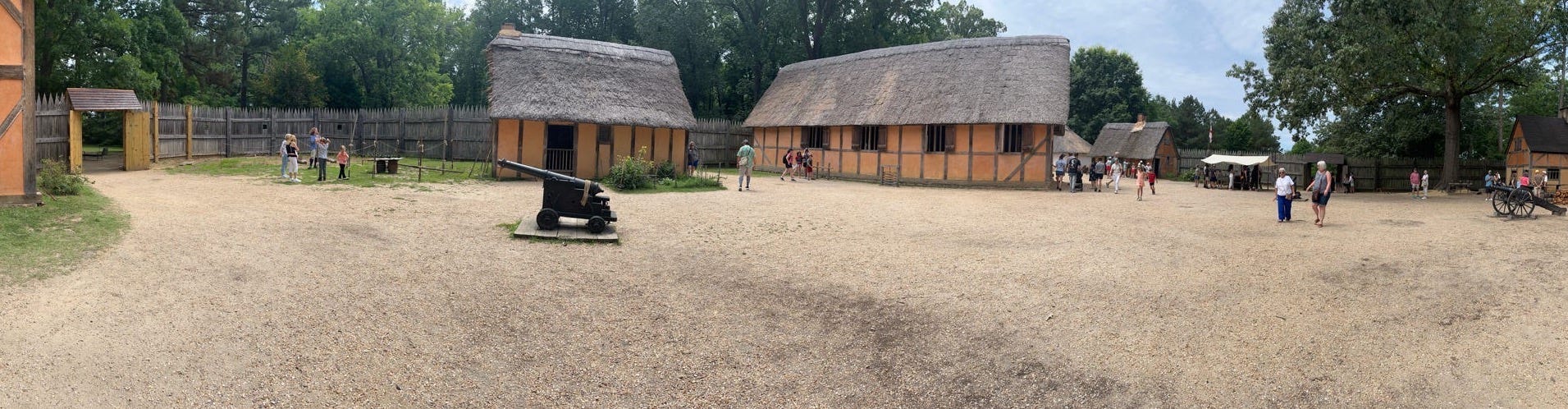
Spending a few hours at the Yorktown battlefield was also far more interesting than it had any right to be. What I mean by this is that there’s basically nothing there—unless you’re someone who’s impressed by recreated earthworks—and yet we still wanted to be there, running around from place to place and trying to figure out where something would have happened. Once in a while, someone’s dropped in a cannon. At one point, we followed a path for about 20 minutes in nearly 90 degree heat from Redoubt 10 all the way back to the Visitors Center and back again because we thought it might take us to Redoubt 9 (which was actually behind us in the other direction) … and no one complained.
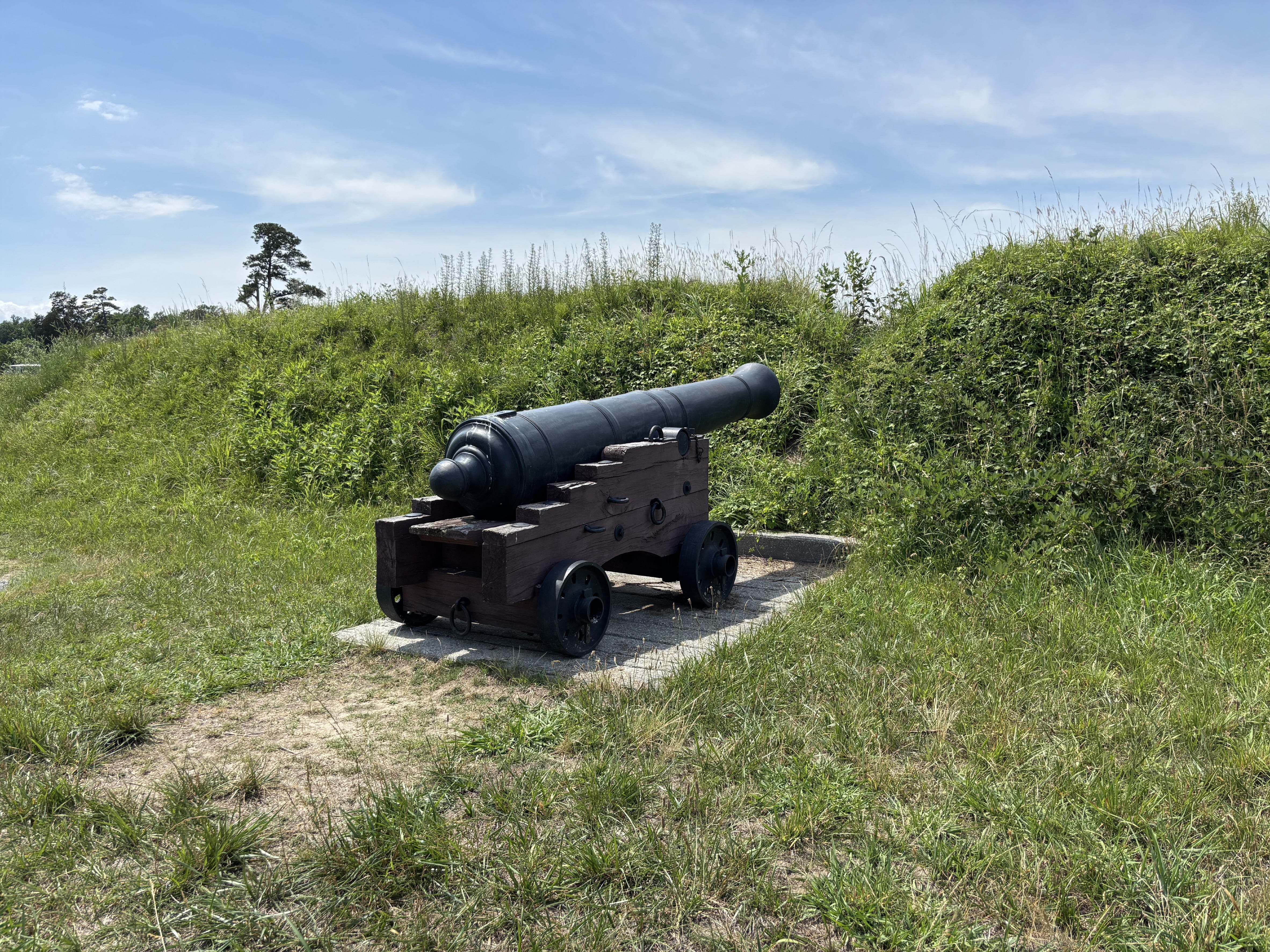
Of course, Redoubt 10 is really the highlight of the whole place since it was the scene of Alexander Hamilton’s daring night assault. Admittedly, a place like this is seemingly designed for someone like me; when I first read The Federalist Papers as a 17 year old college freshman, I was totally captivated by its brilliant expression of the ideals of the American experiment in governance. And maybe I’ve passed some of that along to my children, who have suffered in a mostly-good-natured way through my history and philosophy lectures for their whole lives. But I think more generally, even for people who aren’t huge nerds about American political thought, it’s here, standing at the exact location of the final major battle of the American Revolution, that one feels most closely connected to an important part of history. And, truthfully, there’s something really special about that and it was great to experience it with my whole family.


Having said all of that, I want to finally reflect on the way that the museums portrayed the 1600s and 1700s in America. In the exact middle of 2026, at the 250th anniversary of America’s founding, it’s easy to be either a triumphalist or a fatalist. But the truth, I think, is that this still-young country has a lot to be proud of, a lot to be embarrassed about, and a lot of work left to do. So what I loved about the museum where we spent the most time, at Jamestown, was the way its curators leaned into all of it. It was a museum that was clearly built at a moment quite different from the one we’re in right now and the exhibits focus on three different peoples—the Powhatan Confederacy, the English settlers, and the enslaved Africans—who were all thrust together in this place in the early 1600s. None of these peoples are presented as the clear heroes or the clear villains of the story and none are given more or less attention than another; each group is explained, thoughtfully and in great detail, and presented as worthy of serious study. These exhibits aren’t simplistic monuments to European greatness, nor do they reduce the indigenous or the enslaved peoples to mere victims without any agency. In short, the museum refuses to offer a pediatric education in American history and, in highlighting the complexity of the settlement of this country, it encourages people to sit for a longer period of time with each exhibit and to think critically.
The stops on our little American history vacation didn’t try to convince my kids that America was perfect and recognized that they could find real pride and beauty in the American founding (1607 or 1776) alongside its many flaws. Rather than being worried by nuance and complexity, this level of seriousness captivated my kids; over and over again, we found that we’d spent hours somewhere and that they could have stayed longer. They didn’t need a version of the past in which property-owning white men are America’s flawless heroes, nor were they looking for a version in which every American achievement is downplayed or dismissed because it existed alongside injustice. After a week walking in these places, it’s clearer than ever to me that the American story becomes more compelling when it’s presented as an ongoing project, founded on remarkable ideals by imperfect people, that has often failed to live up to its own promises, and whose greatest moments have come from those who insisted, instead of ignoring those failures, that it keep trying again.